 |
| Promotion to LTC, Army Reservist, 1998
Back in 1993,
I conducted numerous career management and coaching workshops through the TAP (Transition Assistance Program) as an independent
contractor. Having gone through the transition process myself (pre TAP), when I
left army active duty status in 1984, I gleaned insights which became so useful,
that I then used this learning to launch my training business. Subsequently, I went
on to do similar work for private sector clients and continue today, along with
leadership and diversity programs (also skills
and abilities that were enhanced from my army experiences).
And here we are again, twenty years later, and another
drawdown looms as the two combat engagements subside. Unemployment rates are
high and more so for veterans, along with other global economic realities. Transition GPS (Goals Planning Success),
an overhaul of the former TAP program, will drill down to critical levels of
each servicemember’s experiences and goals, to optimize their opportunity to be
‘career ready” beyond the military. A multi-agency effort, with DOD, VA, SBA,
DOL and other initialed organizations, Transition GPS will take a more holistic approach for various
employment and education options, to include entrepreneurship. Seen also as a ‘reverse
boot camp’, this program seeks to reintroduce service members to other aspects
of transitioning from a social, financial, and psychological perspective.
So I found this article I wrote for
transitioning military members while working with TAP in 1993, which was published
in a couple of local Washington DC area newspapers and circulated to my
military organizational affiliations. Much of the advice I offered in this
piece is still applicable, with a tweak or two.
Military downsizing has brought
on the inevitable for many. Retirement or early separation from a career that has
provided a measure of professional growth, steady income, and extraordinary personal
experiences is not an easy feat. But, the transition process is survivable and
can be successful when approached from the standpoint of being yet another
"opportunity to excel."
As a
consultant on career transition issues, I get to see and hear of the many concerns
and issues facing a variety of separating service members. My workshops are
filled with everyone from E-4 to O-6, specialist to Colonel, representing each
of the services, and different occupational specialties, yet all are confronted
with the same immediate task, how to find a job in today's tight market.
The following seven "up front" tips are those I
find to be the most useful to a successful transitioning job search strategy:
I.
Start preparation as early as possible. Especially
for those who are retiring, gearing up for the emotional break is a process
that can be started 2 - 3 years out. Get involved in other organizations that
provide the opportunity to interact with people who are in other careers and
who have varied professional, recreational, and community interests. Make
yourself a "demilitarized zone."
II.
Focus on what it is you want to do, where you want to do
it, and why you want to do it. Decide what is your prime motivator in this process. Are
you seeking a position or career field offering huge financial rewards (mo'
money), is stable and secure (not many are these days), offers intrinsic
rewards (you enjoy it), utilizes your best skills (you're so good at it), or a
combination of two or more.
III. Self-assessment
is one of the most crucial yet often left out steps of the transition process. If
you haven't done so already, take the Myers-Briggs
Type Indicator (an instrument, not a test, which measures personality
attributes and qualities) or some other informal assessment. Some companies use
this instrument to determine the types of positions, and at what level, to
place prospective employees. This will also be useful tool in handling
questions in interviews that relate to your work style preferences (teams,
offsite, management). Interviewers will want to know as much about you as a
person as possible, not just about your work history. Do
take inventory of your skills. Identify
those transferable skills that are marketable (leadership, financial management,
technology, logistics, environmental) to a civilian employer which could easily
match with their organization's needs. Let them be your brand. See a career coach to help in this process.
IV.
Get your net working. Reach out and touch long lost
cousins, old friends, classmates, people that you've worked for and with, as
well as those that have worked for you. Facebook and Link In them. Seek out and go to meetings of professional
associations that match your career interests. Let people know that
"you're transitioning from the military and looking for new career opportunities".
V.
Research. In this social media
information age, the more you know better. Find out about the job market, work
force issues, different industries, geographical information, various
companies, product and economic trends. SEO and the library can be your best
friends in this process. Most are well stocked with career transition related
publications, computer workstations and may even have seminars. Librarians are
knowledgeable about other local resources and may be able to steer you to them.
VI.
Attend career transition workshops, job fairs, and other
professional and personal developmental courses. These
are valuable sources for new information, reinforcement of things you already
know and of course, an opportunity for networking. In the interview, a
potential employer will be interested in your level of comfort and techniques
in various "soft skills" in addition to your core expertise. Attend
job fairs to just practice your “elevator speech” and as a form of researching
the market occasionally.
VII.
Lastly, don't underestimate the necessity of a good
support system during the career transition process. For
many, this is a change of lifestyle, of environment, or mindset. Change brings
about a certain amount of stress. Keep those stress levels in check. Take care
of the mind: read and surround yourself with encouraging, enthusiastic, and
empathetic people. Take care of the body: don't throw away the running shoes or
forget the way to the gym. Take care of the spirit; pray, meditate, relax. Take
it step by step, one day at a time.
Remember, the competition is stiff and starched too! Your
goal is to be as well prepared, as well informed, and as well suited for the
next opportunity as possible. That in itself is something that could give you
the edge over another candidate.
Godspeed and good luck.
Deborah
|
Wednesday, August 22, 2012
7 Career Transitioning Tips for Military: Insights and GPS for the Journey

Tuesday, August 14, 2012
Monday, August 13, 2012
Friday, August 10, 2012
Navigating! For Success in Life, Career and Business Pursuits: You the Champion: 7 Ways To Maximize Your Olympic ...
Navigating! For Success in Life, Career and Business Pursuits: You the Champion: 7 Ways To Maximize Your Olympic ...: http://leadchangegroup.com/you-the-champion-7-ways-to-maximize-your-olympic-gifts/
Sunday, July 29, 2012
Deborah L. Parker Author Interview, Navigating Life's Roadways
Deborah L. Parker
Sylvia Browder's Blog for Women Entrepreneurs
 Deborah: I made my world entrance in the rural town of Waverly Virginia and have traveled many paths since then that have provided hard yet hearty lessons. In my motivational memoir, Navigating Life’s’ Roadways: Stories of Insight from My Odyssey and Inspiration for Your Journey, I take readers along as I chronicles the insights from my determined single parent upbringing in the home of my wise grandparents, then on to college, an army reserve officer career to corporate manager, entrepreneur, breast cancer survivor and now published author. I have been interviewed on Destiny Radio, My Spirit DC, on the setbacks and successes of my journey through family, career, health and relationship issues that I share in this well-received book.
Now I manage a motivational speaking, leadership and personal development workshop company, The DPJ Training Group, located in Leesburg, specializing in seminars and coaching on career, diversity, management and communications topics. I hold a B.A. in Sociology from the College of William and Mary and M.A. in Human Resources Development from George Mason University.
A love for writing started early in my life so while in college I often asked my professors if I could write papers for extra grade credit. Taking that passion forward, I have authored articles on life strategies, business and community issues for publications such as the Alexandria Old Town Crier, Washington Afro Newspaper, Metro Herald and Arizona’s Black Executive Magazine.
I am a member of Loudoun County Alumnae Chapter of Delta Sigma Theta Sorority, Inc., the Metro DC Chapter of the American Society for Training and Development, and Mount Pleasant Baptist Church in Herndon, Virginia.
An area of particular writing interest for me is taking the experiences from growing up and falling down to frame them into valuable lessons. Much of that I’ve found to come from my own mis-steps and the observations of my family to push on in spite of life’s challenges and personal frailties. I have more books to come in this genre that readers will find reflective and motivating!
Sylvia: What inspired you to write your first book?
Deborah: My mother passed in March 2010 and as the old folks say, I experienced more losses. I was then led (by God) to pick up on things I‘d been writing on and off for about 15 years and this book took shape and was published in July 2011. So I also see my mother as my spiritual co-author because she also knew of my goal of writing a book.
Sylvia: Wow that is so special. To be able to share such an accomplishment with your mother; she would be so proud of you. Tell me, what she would say about your book if she was still alive?
Deborah: My mother would say “I knew you could do it.” And she’d be on the phone with her friends telling them, “You know, Debbie wrote a book.” Yeah, she’s always up to something.”
Sylvia: Is there a message in your novel that you want readers to grasp?
Deborah: Never count yourself out. As I’ve encountered my own off course collisions from bad decisions and lack of purpose, there were people in my life who thought I’d never recover. But I didn’t give up on myself, knowing that God “didn’t bring me this far to leave me.” His purpose for my life would be revealed in time.
Sylvia: Do you have any advice for other writers?
Deborah: Just write the words will take shape when it’s time to birth it!
Sylvia: What marketing techniques have you used to sell your books and which ones have been most successful?
Deborah: I have tapped into my networks from college, army, and sorority by sending out newsletters and hosting book signings. Also book clubs have been a good venue.
Sylvia: Really? Well, as for tapping into various book clubs, tell me a little more about your experience using this type of marketing?
Deborah: I’ve contacted friends that are in book clubs and asked them to suggest my book as well as my own book clubs (past and present). And I offer to come and speak to the club.
Sylvia: Why should we buy your book?
Deborah: If you’ve ever:
Sylvia: Is there a special place that you prefer when you write?
Deborah: My energy is good in my home office or there are times I’m led to move to my kitchen table, a subtle shift in the creativity
Sylvia: What projects are you currently working on?
Deborah: I’m working on a sequel workbook to Navigating Life’s’ Roadways as well as a leadership book based on the lessons I learned from my favorite uncle, a Vietnam vet airborne ranger, who passed away in December.
Sylvia: What is your POWER WORD? Why this word? (A power word is a word that has great effect to the person hearing or reading it. My power word is EMPOWER)
Deborah: MOVE I’ve found that God works with my life by taking me low then telling me when to MOVE up and on. I started my business and wrote a book after coming out of “valley experiences.”
Sylvia: How have you found ways to make sense out of the challenges of your life?
Deborah: I see them all as “ordained.” It was necessary for me to go through these events to get growing in a new season. For example, writing a book while grieving the loss of my mother gave me the opportunity to reflect on the power of her life and how it’s intertwined with mine in ways I wasn’t aware of initially. I was born when she was a high school teenager and she went back to graduate. I’m proud of that, particularly because this was 1955 in a poor black family. It was and still is a big deal and speaks volumes for her grit and my grandparent’s support. And the fact that I went on to college is an outgrowth of her determination to learn and make it!
Sylvia: Deborah, thank you! Please share your contact information:
Deborah: My pleasure Sylvia. My contact information is below:
Facebook: http://www.facebook.com/#!/pages/Navigating-Lifes-Roadways-by-Deborah-L-Parker/167445413327812
Facebook: www.facebook.com/pages/The-DPJ-Training-Group
LinkedIn: http://www.linkedin.com/profile/view?id=77669511&trk=tab_pro
Blog: http://marysmatters.wordpress.com/
Blog: http://leadershipquests.blogspot.com/2011/07/leadership-family-and-roots.html
Sylvia Browder's Blog for Women Entrepreneurs
An Interview with Deborah Parker: Author, Speaker & Entrepreneur
Sylvia: Hi Deborah, it is such a pleasure to interview you. Please give our readers a brief introduction of yourself and a little about your book.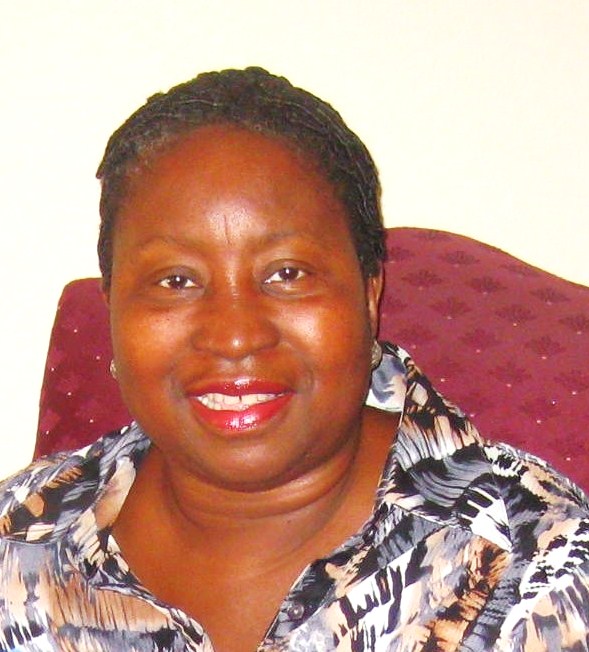 Deborah: I made my world entrance in the rural town of Waverly Virginia and have traveled many paths since then that have provided hard yet hearty lessons. In my motivational memoir, Navigating Life’s’ Roadways: Stories of Insight from My Odyssey and Inspiration for Your Journey, I take readers along as I chronicles the insights from my determined single parent upbringing in the home of my wise grandparents, then on to college, an army reserve officer career to corporate manager, entrepreneur, breast cancer survivor and now published author. I have been interviewed on Destiny Radio, My Spirit DC, on the setbacks and successes of my journey through family, career, health and relationship issues that I share in this well-received book.
Now I manage a motivational speaking, leadership and personal development workshop company, The DPJ Training Group, located in Leesburg, specializing in seminars and coaching on career, diversity, management and communications topics. I hold a B.A. in Sociology from the College of William and Mary and M.A. in Human Resources Development from George Mason University.
A love for writing started early in my life so while in college I often asked my professors if I could write papers for extra grade credit. Taking that passion forward, I have authored articles on life strategies, business and community issues for publications such as the Alexandria Old Town Crier, Washington Afro Newspaper, Metro Herald and Arizona’s Black Executive Magazine.
I am a member of Loudoun County Alumnae Chapter of Delta Sigma Theta Sorority, Inc., the Metro DC Chapter of the American Society for Training and Development, and Mount Pleasant Baptist Church in Herndon, Virginia.
An area of particular writing interest for me is taking the experiences from growing up and falling down to frame them into valuable lessons. Much of that I’ve found to come from my own mis-steps and the observations of my family to push on in spite of life’s challenges and personal frailties. I have more books to come in this genre that readers will find reflective and motivating!
Sylvia: What inspired you to write your first book?
Deborah: My mother passed in March 2010 and as the old folks say, I experienced more losses. I was then led (by God) to pick up on things I‘d been writing on and off for about 15 years and this book took shape and was published in July 2011. So I also see my mother as my
 spiritual co-author because she also knew of my goal of writing a book.
Sylvia: Wow that is so special. To be able to share such an accomplishment with your mother; she would be so proud of you. Tell me, what she would say about your book if she was still alive?
Deborah: My mother would say “I knew you could do it.” And she’d be on the phone with her friends telling them, “You know, Debbie wrote a book.” Yeah, she’s always up to something.”
Sylvia: Is there a message in your novel that you want readers to grasp?
Deborah: Never count yourself out. As I’ve encountered my own off course collisions from bad decisions and lack of purpose, there were people in my life who thought I’d never recover. But I didn’t give up on myself, knowing that God “didn’t bring me this far to leave me.” His purpose for my life would be revealed in time.
Sylvia: Do you have any advice for other writers?
Deborah: Just write the words will take shape when it’s time to birth it!
Sylvia: What marketing techniques have you used to sell your books and which ones have been most successful?
Deborah: I have tapped into my networks from college, army, and sorority by sending out newsletters and hosting book signings. Also book clubs have been a good venue.
Sylvia: Really? Well, as for tapping into various book clubs, tell me a little more about your experience using this type of marketing?
Deborah: I’ve contacted friends that are in book clubs and asked them to suggest my book as well as my own book clubs (past and present). And I offer to come and speak to the club.
Sylvia: Why should we buy your book?
Deborah: If you’ve ever:
- Found yourself unclear on what to do on your career path;
- Wavered in your faith journey;
- Traveled the road of sickness;
- Made mistakes along the way;
- Lost and grieved hard;
- Been so low you couldn’t figure out up;
- Wondered what your childhood taught you;
- Had family and relationship challenges;
- Or fill in the blanks……
Sylvia: Is there a special place that you prefer when you write?
Deborah: My energy is good in my home office or there are times I’m led to move to my kitchen table, a subtle shift in the creativity
Sylvia: What projects are you currently working on?
Deborah: I’m working on a sequel workbook to Navigating Life’s’ Roadways as well as a leadership book based on the lessons I learned from my favorite uncle, a Vietnam vet airborne ranger, who passed away in December.
Sylvia: What is your POWER WORD? Why this word? (A power word is a word that has great effect to the person hearing or reading it. My power word is EMPOWER)
Deborah: MOVE I’ve found that God works with my life by taking me low then telling me when to MOVE up and on. I started my business and wrote a book after coming out of “valley experiences.”
Sylvia: How have you found ways to make sense out of the challenges of your life?
Deborah: I see them all as “ordained.” It was necessary for me to go through these events to get growing in a new season. For example, writing a book while grieving the loss of my mother gave me the opportunity to reflect on the power of her life and how it’s intertwined with mine in ways I wasn’t aware of initially. I was born when she was a high school teenager and she went back to graduate. I’m proud of that, particularly because this was 1955 in a poor black family. It was and still is a big deal and speaks volumes for her grit and my grandparent’s support. And the fact that I went on to college is an outgrowth of her determination to learn and make it!
Sylvia: Deborah, thank you! Please share your contact information:
Deborah: My pleasure Sylvia. My contact information is below:
Facebook: http://www.facebook.com/#!/pages/Navigating-Lifes-Roadways-by-Deborah-L-Parker/167445413327812
Facebook: www.facebook.com/pages/The-DPJ-Training-Group
LinkedIn: http://www.linkedin.com/profile/view?id=77669511&trk=tab_pro
Blog: http://marysmatters.wordpress.com/
Blog: http://leadershipquests.blogspot.com/2011/07/leadership-family-and-roots.html
Tuesday, July 10, 2012
Press On! 3 Ways to Sync Your IPS (Internal Positioning System) to Destination Success

How do we find the “true north” to achieving our goals?
The reality is that in moving on down the roads of our
journeys, we gain and lose ground. All is aligned with great momentum one
moment. Then in the next we get misdirected and wonder how we’ll find our way. And
most times we eventually do get there, somehow. Leading us to ponder, is there
a life GPS to keep us on course?
I’ve surmised that we all have an IPS (Internal Positioning
System) to steer us. If we engage it. Just like an automobile’s navigation
system— with its GPS, dashboard and features— we too can punch in coordinates
for where we want to go in life. We have attributes, strengths and limitations
that direct us. Our motivations, habits or wits contribute to how we handle the
inevitable bumpy roads. Destinations for our career, family, health, quality of
life or relationship goals – we can arrive at these places, based on how we
deploy the elements of our IPS’s dashboard.
Yet, I’ve found that this IPS, like GPS technology, has
worked for me sometimes and malfunctioned others. In my car, when the quirky
voice of the dashboard is silent, I check to see if the GPS is on. Particularly
if I’m in unfamiliar territory. In my
life, if I’m not adhering to right messages, I sense a system failure; the
signal for me then is that maybe my IPS is not on. I feel lost, literally, on my life quest. Is
this a place I need to explore more, I question.
OR
Maybe I need to Press!
So what
are three parts of the on button for syncing that IPS?
 |
| The road I grew up on |
1. Discover Your Unique Routing. Understanding
how our life works in terms of its unique cycles
and circumstances provides a map for focus. Why so? Knowing the design of our
route helps us navigate and heed the messages in the hills and potholes of life. I have come to realize that an off road
collision in a low place is part of my special path before I slowly make my way
out to higher ground and another level that God has waiting for me. Also moving through the roadways of our journey we
hold different emotions and experiences that bring out our strengths as well as
our frailties. At times, I get sidetracked here, but this history accumulates,
becoming my cargo as I launch in another direction. Whether it’s good or bad we
all carry this load. And it can keep us on a realistic route, as we define
success.
- What’s the Force That’s With You? This IPS is part of our drive, an engine that fuels us every day. It takes us through storms and other bad conditions. Our IPS is composed of ‘gifts and wits’, perspectives, willingness to admit and learn from mistakes, humor, gratitude, wisdom, faith and the list…goes on. These are the blocks of our being, in varying quantities. A good deal of this force comes from our early life values and grounding. Raised poor, Baptist, in a rural town, but instilled with hope for better times, and family who encourage me to “git my lessin”, equipped me to set out on my sojourns of twists and turns. With accomplishments and failures. There's power in both of these for us, ignited from this combustible combination.
3.
Recognize Your Hardwiring. What’s inbred in our natural circuits? There’s a DNA that makes and
shapes us to be. I often share that at my core, I’m the oldest child product of
a determined single parent teen mother. With no excuses, she burrowed her way
through many adversities on her journey. After she passed in 2010, I reflected
on what she’d left me, spiritually. I
share in my motivational memoir, Navigating Life’s Roadways, that she provided
an example of sheer will and a strong work ethic for me. And I think of this
when I get stuck or waylaid in my life. She taught me to drive, pass some of
life’s tests and now has turned the steering wheel over to me— to keep going. The
operating hardware and software of her IPS (Internal Positioning System)
spiritually resides on my dashboard, with God —my ever present Pilot, the main
engaging button. I've found that there's an automatic syncing coming out of this type of recognition, which will stand the hard inspections of our many journeys.
Press On Through Storms, Sync your Success and Drive to Your Best!
Subscribe to:
Comments (Atom)